
Beyond the Canvas: Inside the Contemporary Art World
From international exhibitions and American museum collections to her exploration of identity through figurative oil painting, award-winning artist Masha Menshikova discusses her artistic philosophy, global career, and evolving vision.
Featuring Masha Menshikova — Winner of the Travel to Art Award 2025, “Best Artist,” Contemporary Art nomination.
You studied art business and art history at Sotheby’s Institute of Art in London. How did this education shape your understanding of the commercial side of art and of building an international career?
I have so many wonderful memories from my London years, and I believe that experience shaped me deeply as an artist. I arrived as a trained painter, but Sotheby’s Institute taught me something important: a painting has two lives, one in the studio and another in the world. I learned how the international art market works, how galleries, auction houses and collectors make their decisions, and why an artist’s exhibition history and reputation matter. Most importantly, I began to understand how to build an international career without compromising my artistic vision. London also gave me one of my favorite memories: selling a painting to a Forbes-listed collector at the Belgian Ambassador’s Residence.
I still remember that evening so vividly! For a young artist, having someone with such an established collection choose your work is an incredible feeling. It gave me confidence that my paintings could find their place in the international art world. Since then, my work has traveled from London to Spain, Turkey, Greece, Qatar and the United States. The knowledge I gained at Sotheby’s still helps me make professional decisions, but I always keep one thing separate: the business side of art requires strategy, while the creative process needs complete freedom.
You have repeatedly exhibited in Miami, including during Miami Art Week, at Art Wynwood and CONTEXT Art Miami. Why is it so important for a contemporary artist to be represented at these fairs?
Miami has become one of the most exciting international centers for contemporary art. Events like Miami Art Week and Art Wynwood bring together collectors, curators, galleries and artists from around the world. For an artist, it’s an incredible opportunity not only to present new work, but also to build relationships that can last for years. My first experience was at the Miami River Art Fair in December 2019, and I’ve participated in Miami’s art scene almost every year since. What I particularly love about these events is how naturally conversations begin.
Someone might discover your painting at a fair, become curious about your work and eventually visit your studio. When I was living in Miami, that happened quite often. Some of my lasting relationships with collectors started with a simple conversation in front of a painting. And that’s what makes these fairs so valuable to me: beyond the commercial side, they create genuine human connections.
In your work you turn to figurative painting, surreal imagery and the symbolism of chess and mannequins. What ideas do you aim to convey through these images, and how is their meaning changing in contemporary society?
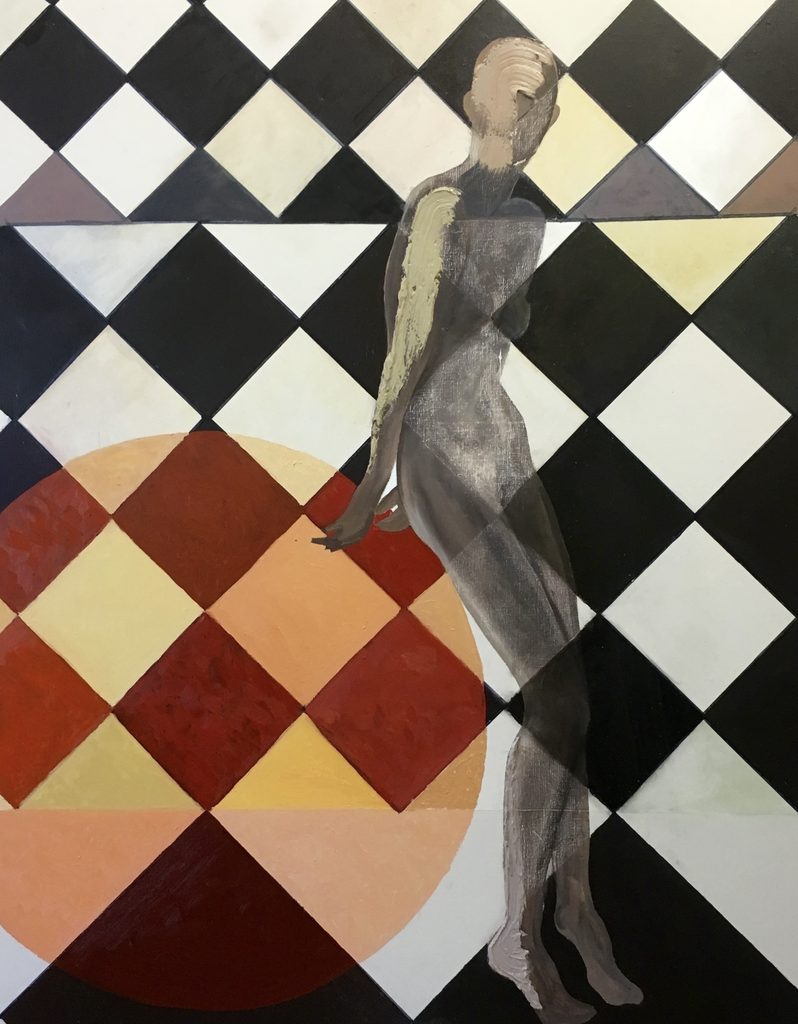
There is one question I keep coming back to: who is the player, and who is the piece? In chess, every piece has its own rules and limitations, and I see a strong connection with the way society works. We are all given certain roles, expectations and boundaries, and sometimes we follow them without even questioning why. Mannequins represent another side of this idea. They are designed to look perfect, shaped by fashion and modern beauty standards, but they have no personality, no emotions, no inner life.
Nobody ever asks what a mannequin feels! And sometimes I think modern society expects people to become a little like that: perfectly presented on the outside, while their individuality gets lost somewhere along the way. One of my paintings, Persona, explores this idea through a face dissolving into bright pink and teal brushstrokes, with only one eye remaining clearly visible. Today, with social media, filters and artificial intelligence, the line between who we really are and the image we present to the world is becoming increasingly blurred. I love working with oil paint because of its depth, texture and endless possibilities.
Sometimes a single brushstroke can express an emotion that would be difficult to explain in words. I combine figurative elements with expressive, almost dreamlike painting because I want viewers to discover their own meanings. People often share their interpretations with me, and I’m always fascinated by how differently they see the same work. That’s the beauty of art: it creates a conversation without telling anyone what to think.
As a leader in the creative industries, what contribution do you aim to make to the development of the US creative economy?
I believe an artist’s contribution goes beyond creating paintings. It’s also about supporting the art community and helping people connect with art. I’m proud that several of my works are part of museum collections in the United States, which is a meaningful recognition for any artist. As a board advisor at the MORA Museum of International Art, I help support exhibitions, introduce international artists to American audiences and build connections with collectors. I’ve also participated in major art fairs in Miami and New York and exhibited my work internationally, including at the Qatar International Art Festival.
For me, these experiences are opportunities to encourage cultural exchange and bring different artistic perspectives together. At the same time, I see art as an important part of the economy. Having studied at Sotheby’s Institute of Art and worked with American galleries and collectors, I understand how many people and businesses are involved in the art world. Through my paintings, exhibitions and art education projects in Florida and California, I want to encourage more people to discover, appreciate and collect original art. I’m also passionate about preserving traditional oil painting in our increasingly digital world.
I believe there will always be something irreplaceable about a painting created by a human hand. My goal is to bring my European artistic background into dialogue with contemporary American art, create works with lasting value and contribute to the cultural life of the country I now call home.
What creative and professional goals have you set for 2026? Do you plan to present new projects to American and international audiences?
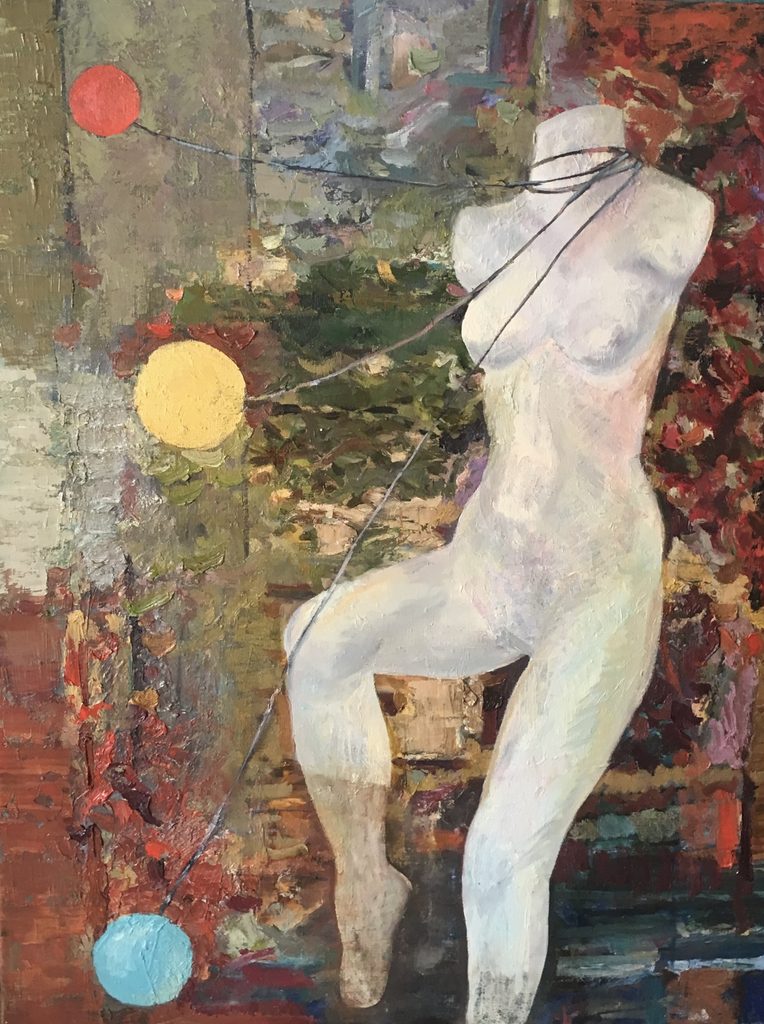
Absolutely! I’m working on a new series called Living Figures, which continues my exploration of mannequins and human identity. But this time, something changes: the mannequins begin to come alive. Their smooth, artificial surfaces seem to break apart, revealing expressive brushstrokes, color and movement underneath.
It’s almost as if a real person is trying to emerge from this perfect artificial shell. I’ve been creating much of this series in Santa Barbara, California, where I spend a great deal of time. They call it the American Riviera, and I understand why. The Mediterranean atmosphere, the mountains, the ocean and especially the light are incredibly inspiring. I’ve always admired the French Impressionists, and oil painting gives me the freedom to capture those constantly changing colors and impressions.
For 2026, I’m planning to present the series in the United States in collaboration with DAKKARA ART, followed by international projects, including Le Salon Privé Monaco Art Fair at the Fairmont Monte Carlo and a possible presentation in Geneva during Auction Week. I love the idea that paintings created on the American Riviera might travel to the French Riviera, where so many great artists found their inspiration. And I have a few other ideas that I’m not quite ready to reveal! I always enjoy experimenting with new ways of expressing my ideas, so perhaps some of my mannequins will step even further into life. We’ll see!
Oleksii Didihurov
