
An Exclusive Interview with the Cover Star of Travel to Art`s Winter Issue.
The messy aesthetic is making a comeback as a reaction to years of perfectly polished, Instagram-ready imagery. Do you feel this cultural shift happening? Why do you think imperfection is becoming attractive again?
The “messy” aesthetic—I love it! The way I see it, messiness is freedom, and freedom is fashionable—not to mention contagious. I absolutely believe a cultural shift is taking place. I’d even liken it to an artistic renaissance: a creative, expressive explosion. I see it everywhere—not just in creative expression, but in people’s desire to have fun and enjoy life again.
*Life by Messy Girl* is, in many ways, the offspring of societal upheaval and my own process of coming to terms with who I really was, rather than who I kept working to become for everyone else. I truly thought that if I worked hard enough, I could make myself feel a certain way. I should have flipped that: feel first, then commit.
For what it’s worth—and I’m just one girl—my theory is that COVID changed how we relate to freedom and to one another. For safety, people had to give up some freedoms. We became guarded, nervous, wary of others, mistrustful, and more insular. It took time to let those defenses down again. But now, as people begin to open up, their wings are spreading, and creative expression is flourishing.
The messy aesthetic attracts people because everyone wants the freedom to be exactly who they are. “Humanity rebirth”—Messy Girl.
And let’s face it: breaking rules can be downright stupid. Trust me, I’ve tried it. But we can break free through how we express ourselves and our views. That freedom can exist even in an actual jail. Freedom is a state of mind. I learned the hard way that you can find freedom within the lines—and sometimes outside them, when necessary—through your thoughts and feelings.
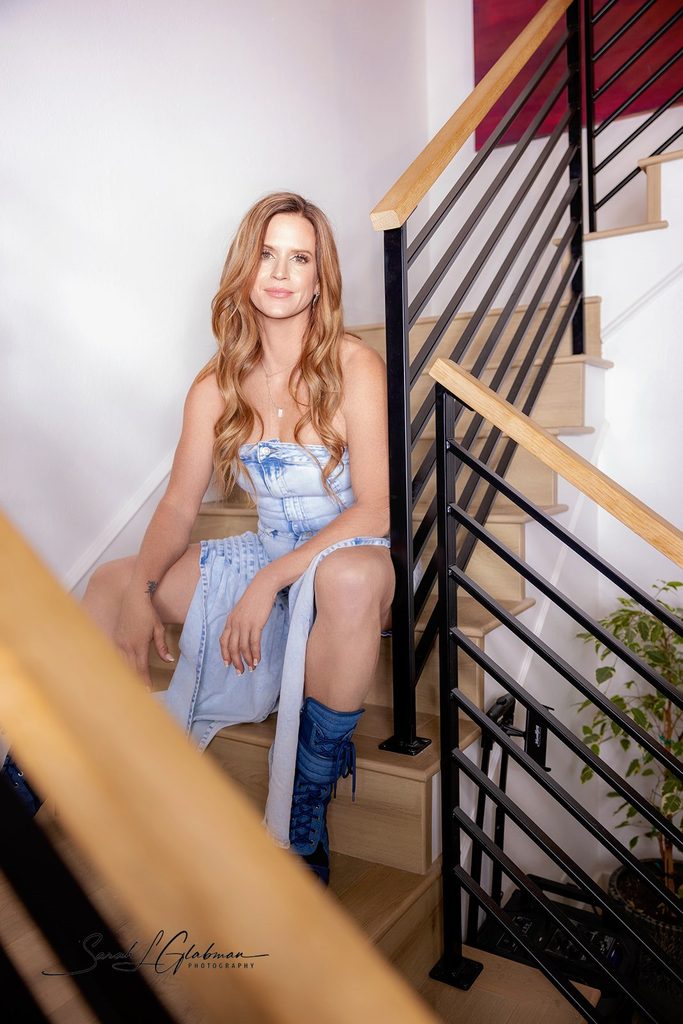
You are currently preparing a new project. What is the main idea behind it, and what would you like people to experience through this project?
Until now, my art has come about somewhat haphazardly as a way to express emotion. The freedom of having no forced outcome is what drew me to abstract art. Hence the name “Messy Girl”—oh, sweet irony. No rules; anything goes. It offers a little freedom at a time when that basic birthright can feel out of reach or threatened for so many people.
A cohesive show with an intentional voice wasn’t even on my radar. But as I’ve developed my work and explored different mediums, I’ve started to notice a thread running through it. That thread became the catalyst for my upcoming show, *Layered Souls*. The name is probably all I can say without revealing too much. Besides, being “cagey and mysterious” makes me look more like an artist. I have to look the part!
What I can say is that the work is deeply personal. Painting is a full emotional experience for me. My mind wanders through the depths of my relationships and the origins of my shame, searching for triumphs while swirling in self-doubt and worry. I think deeply about how I can be a better mother to my sons and continue showing them that I understand them, know them, and will always love them.
As I paint, I think about the images and symbols that find their way onto the canvas. I may be overwhelmed by gratitude for life’s blessings, aching with heartbreak, or weighed down by the everyday tasks that pile up like anxiety bullets. I’ve been sifting through the ashes of my broken family and 23-year marriage, while trying to make sense of my complicated psyche, human dynamics, and the way every interaction creates a reaction. That thread—our connection to one another—is what ties us together.
Each piece aligns with a feeling or an experience. The images that spark a visceral reaction to a memory are, I think, what draw people to my “messy” work.
Alongside your creative work, do you find time for social initiatives and charitable projects? Is giving back an important part of your personal and creative philosophy?
I love this question. Unequivocally, yes! It might sound contrived or ambitious, since some people may have self-serving motives when they make such a bold statement. But in true Messy Girl fashion, I’m starting completely backward: giving before there’s anything to give.
At the time of this article, the only thing I can report is that it’s in the works—and that it comes second to my family’s security and safety. I say this all the time: “I don’t want anything in spite of anyone; I want it with them.”
My theory—and my mission—is to prove that kindness and love can generate what’s needed. Alongside launching my LLC, I’ve also created a nonprofit that’s still in its early stages. It’s the beginning of a Messy Girl charity focused on building homes for women and children seeking refuge from harmful situations and with nowhere else to go.
When security, safety, and basic needs are used as currency in a controlling relationship—as a way to hold power over another person or a child—I want to help create as many safe houses as I can.
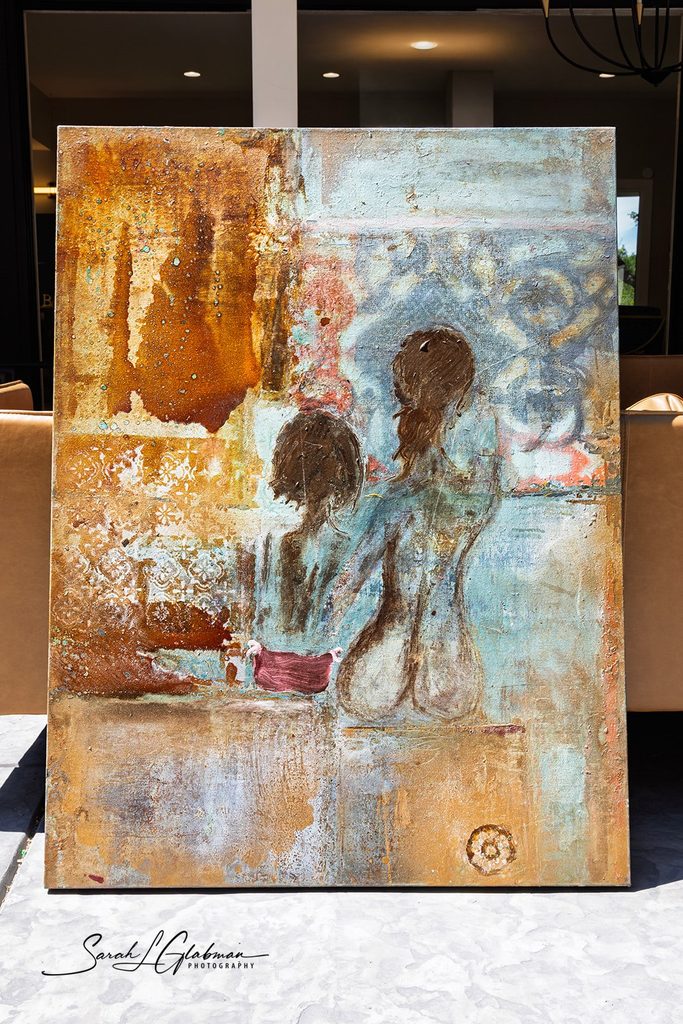
You have worked in interior design for more than 15 years, and during the pandemic you began developing your practice as a painter. How did the transition from creating spaces to creating art change your understanding of your own creative identity?
The move from creating spaces to creating art wasn’t really a transition; it was a development of how I communicate through aesthetics—an extension of my expression.
The biggest gift during this time was realizing that I didn’t need an objective for the finished piece. Following my heart would lead me to it. When I followed my feelings, viewers consistently told me they felt something, even if they couldn’t name it. Emotion was present; they felt it wash over them. To me, that’s magic. I paint while processing immense life decisions and emotions, and when people see the marks on the canvas, something happens for them emotionally. I can’t explain it—and I don’t want to. It’s the magic of feelings versus tangible objects. You can have all the objects in the world, but emotions are another matter; abundance can’t guarantee them.
This period also made me examine where a piece begins, how it evolves, and why I decide to stop when I do. Artists often say the trick is knowing when to stop. But with abstract art, when you don’t begin with a specific objective, how do you know where to stop? Art might be one of the most ambiguous professions out there.
Why do people want art—really want it? There may be reasons related to status, wealth, or wanting to appear deep. But if someone buys a piece simply because they like it, I think the desire begins with feeling. Why do some pieces become iconic? For me, everything is feeling-based. I’m deeply sensitive. Sometimes I feel as though I’m walking around with little receptors all over my body, taking in every kind of input—from people and things to balance, contrast, and smells.
I begin all my creations—whether it’s art, interior design, cooking, a handmade school lunch, or a love note slipped into a briefcase—with a feeling in mind: calm, freedom from worry, unclutteredness, love, coziness, familiarity. You get it.
Honestly, I saw the pandemic as a reprieve from focusing on other people’s homes and feelings—a chance to turn inward and focus on my own and my family’s. What I didn’t expect was that being together as a family 24/7 would lead to such deep introspection as a couple, ultimately bringing about our separation and divorce. As is often true for creatives, pain became a way to express emotion. That was certainly true for me.
Alongside this new outlet for processing difficult emotions, something began stirring inside me, like a little engine waiting to start—unencumbered by the parameters of an art class, objectives, or other people’s opinions. I’d heard so much criticism and doubt: why it wouldn’t work, why painting wasn’t a serious profession. Then someone said, “Don’t paint for anyone or with an objective in mind. Just do what feels good.” It sounds simple, but it set me free. For the first time, I felt true freedom in my thoughts—at least to this degree. Running comes close.
When I realized that this freedom of feeling had inspired my design work all along, I was ecstatic.
Your experience brings together interior design and abstract painting. In your view, how can art influence the value of a space—emotionally, culturally, and even commercially?
Again, it comes down to feeling. I hate to sound like a broken record, but who knows exactly why they feel so good around someone, or so comfortable in a particular room? There’s a sense of familiarity, warmth, love—of “coming home.” The same is true of discomfort. I know that when I see a skull, it immediately evokes a feeling. How many symbols, colors, and brushstrokes can do that? I’d venture to say all of them, its the intention and orientation that the hidden message comes through.
How could a space not gain value if the experience of being in it stirs someone deeply? Art is energetic, and it has the power to change big things. Moving from interior design to painting was a natural transition for me because I have the same objective: to create a feeling. When the two come together, that’s magic. I like to imagine a painting as the centerpiece of a room designed around it.
“How do you want to feel?” Let’s build, paint, or dance our way into that feeling. For goodness’ sake, can we start with how we want to feel and who we want to be, rather than how we want to appear to others? Follow the good feeling and lean into it. To me, that’s basic math.
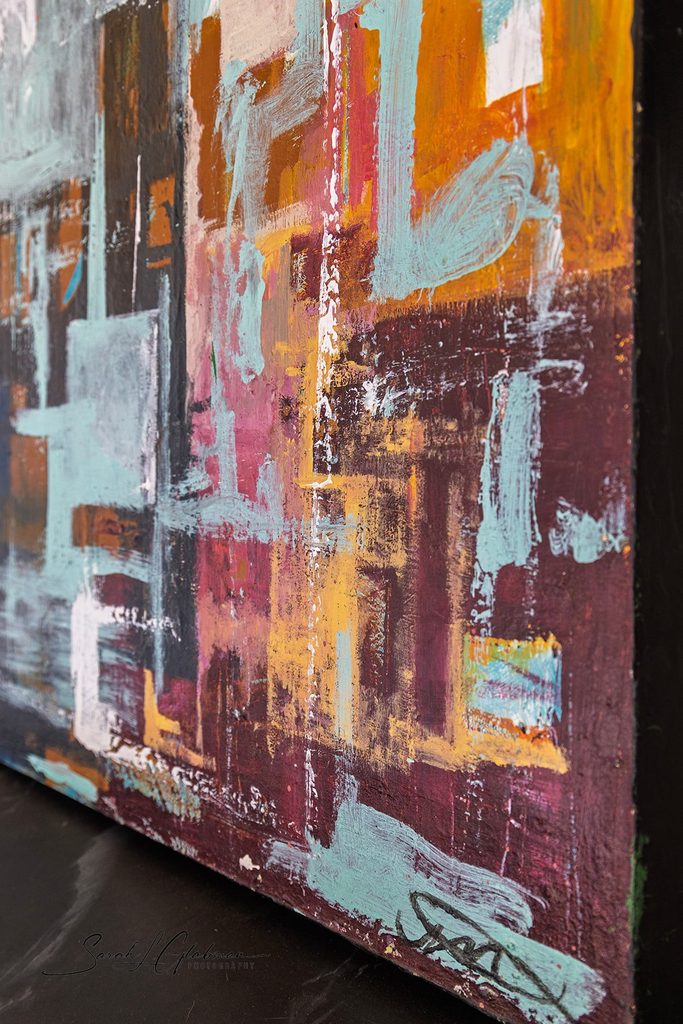
Art, design, fashion, hospitality, and technology are increasingly intersecting. Where do you see the most interesting opportunities for artists within today’s creative economy?
Woof! I’ll have to work to consolidate my answer to this one. These fields have intersected since the beginning of time. Their forms of expression and manifestation have evolved, but culture is still shaped by our reactions and by expression in all its forms. We all experience the human condition: self-consciousness, awareness, sensitivity, and everything that comes with them. So, to me, the question is: How could these fields *not* intersect?
The opportunity I see for artists today is the ability to inspire thought and change on a mass scale—even on an energetic, vibrational level. I try to avoid labels that define a particular “type” of person. Some viewpoints and communities have been misunderstood or dismissed, but everyone should have the opportunity to express themselves and be heard.
Today, anyone can join a platform like TikTok and potentially influence others. You can share ideas, challenge conventions, or simply create content you find meaningful. But that raises important questions: What do we want to influence? What do integrity and character look like in that role? And what does it mean to do the right thing?
This is one of my biggest concerns—and hopes—in today’s social climate. We have so much access to mass communication and influence. Why not use it to encourage people to treat one another well? Any creative expression that reaches people has the potential to shift the cultural conversation for the better. That’s the opportunity. Artists are influencers today—yay! And with that influence comes a responsibility to help shift the collective mood in a positive direction.
If I’m fortunate enough to reach a community of people, I don’t want to focus only on what I can gain. I want to ask how we can all benefit. The social climate is ripe for positive change. I don’t want more; I want better.
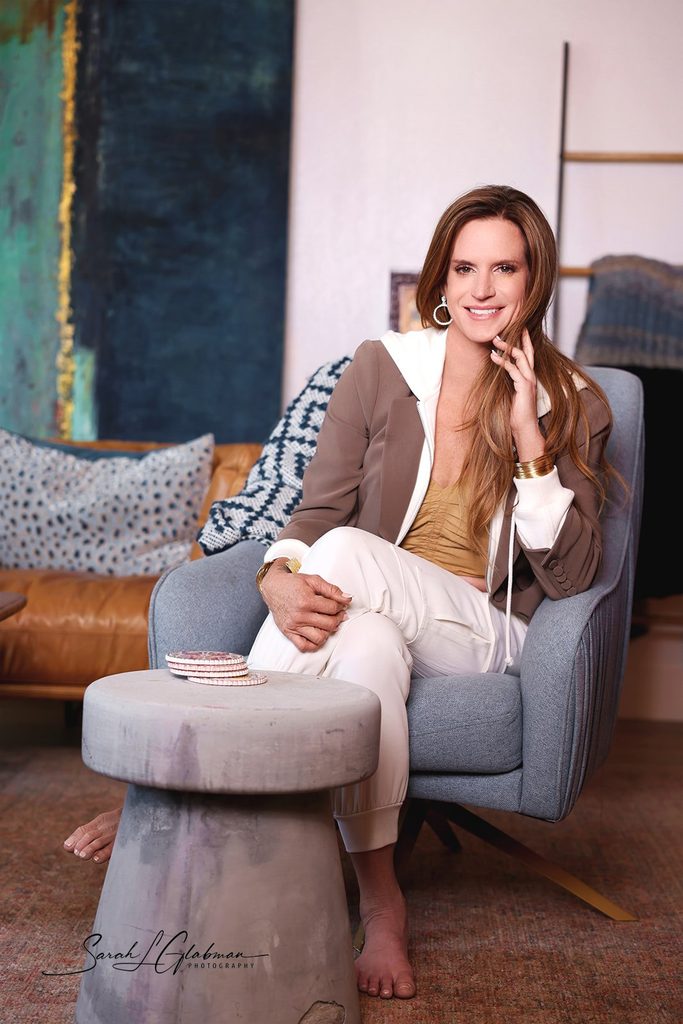
Today, artists are increasingly expected to be more than creators—they are also entrepreneurs, personal brands, and active participants in the global marketplace. How comfortable are you with this evolving role of the contemporary artist?
I feel this question more deeply than you might expect. As a kid in the ’70s, I watched Bob Ross and embroidered flowers on my jeans. I imagined art as a carefree float down a placid river, where the truly lucky and talented got to live a privileged, alternative life.
The entrepreneurial side of being an artist can feel a little uncomfortable, but I actually like that artists are held to the same responsibilities as others—and perhaps even more. Cash used to be king; now influence is taking the throne. If you have influence, you have a choice about how to use it. I know what choice I would make.
We increasingly speak about the creative economy as a powerful ecosystem in which art, design, entrepreneurship, and social impact generate not only cultural value but economic value as well. How do you see your own place within this ecosystem as an artist, designer, and entrepreneur? And what do you believe a contemporary artist needs in order to transform creativity into a sustainable professional ecosystem?
This is Marketing and Business 101: “What problem are you solving?” Something has value when it meets a need or solves a problem. If artists can shift feelings—the intangible—and use that influence, I believe we have a responsibility to do so in a way that supports humanity and protects our resources.
I believe financial goals are more likely to be sustainable when they’re aligned with ethical goals. That’s where I choose to start.
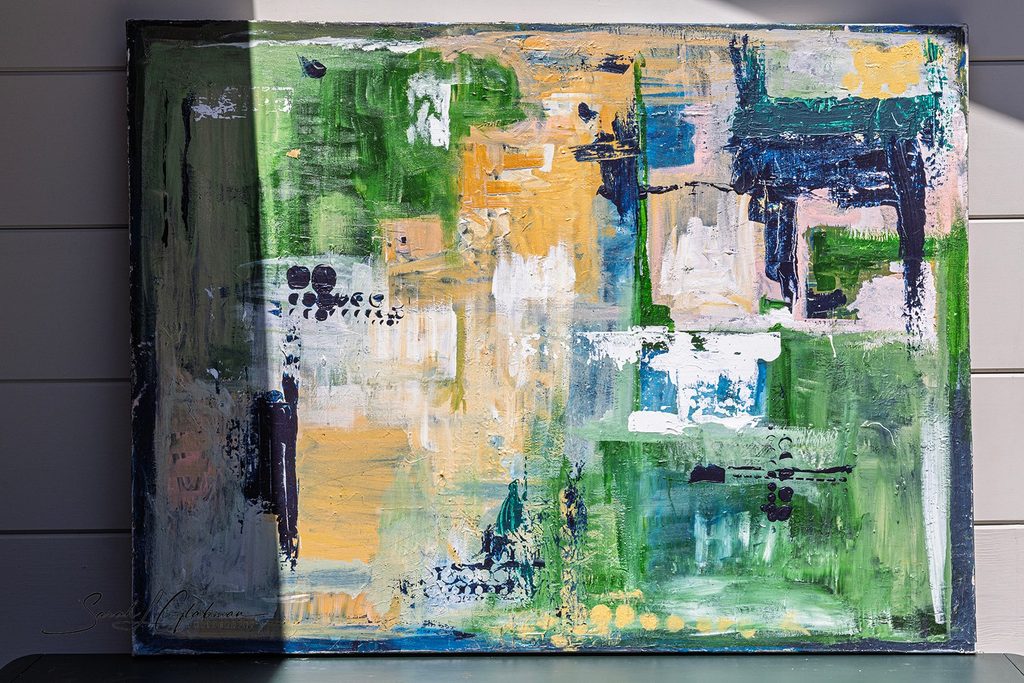
Could you describe the atmosphere in which your artworks usually come to life? Where do you work, what surrounds you, and do you need music, silence, a certain kind of light, or perhaps even a little creative chaos?
Short answer: I’m still figuring that out. A few things are certain: there’s always music, a karaoke microphone, at least one dog sleeping by my feet, and paint and canvas in the room. The rest is part of a personal creative journey I’m still on.
Social media has become a gallery, a media platform, and a sales tool for artists all at once. What role do Instagram and other platforms play in promoting your art and connecting you with your audience?
Honestly, I believe social media plays a critical role and is a necessary part of doing business as an artist in today’s cultural climate. That said, engaging with it—and even maintaining it—can feel daunting, uninteresting, and like a poor use of my time.
When we’re meant to do something that could have a meaningful impact, getting caught up in the business and administration around it—including marketing—can consume the art itself. This is something I’m still working through, and my answer is still developing.
With so much uncertainty in the world today, what do you think people are looking for from art now—beauty, escape, truth, connection, or perhaps something entirely different?
What a beautiful question. Yes—all of the above. But at its essence, I think we’re all little kids with big imaginations. Without filters or outside judgment, we’d admit that we still want magic: the day we find a genie in a bottle, scratch a winning lottery ticket, or discover a diet pill that frees us from self-control and shame.
Art—an image or an object—can instantly transport us into another reality and evoke a visceral feeling. Uncertainty is inevitable, as is fear for the future and for generations to come. But understanding and connecting with another human being can offer solace and keep hope alive. That connection helps life continue to yearn, grow, and thrive.
Cover photo by Sarah Glabman
Oleksii Didihurov
