
Where surrealism, expressionism, and hyperrealism meet personal experience, memory, and the search for identity.
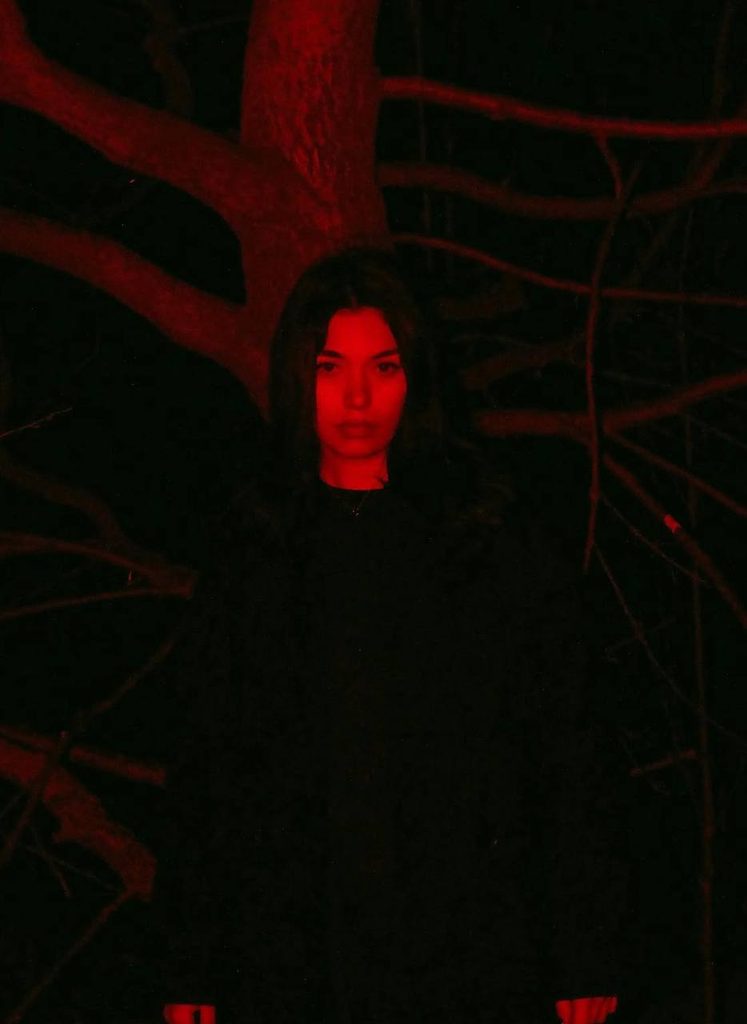
For Ukrainian contemporary artist Dilara Azgin, painting is a language for emotions that words cannot always express. Combining elements of surrealism, expressionism, and hyperrealism, she creates works that explore fear, vulnerability, memory, and the complexity of human experience.
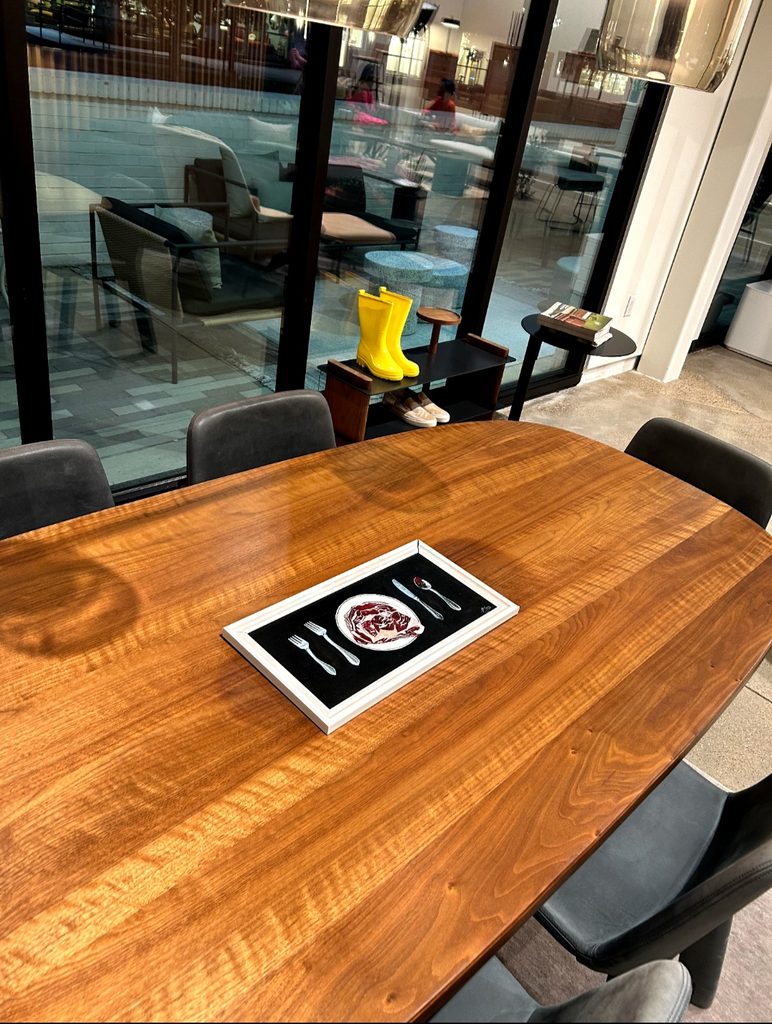
Her paintings On the Table (2025) and Dinner (2024) were selected for Travel to Art exhibitions in Dallas and Miami, introducing American audiences to her distinctive artistic perspective.
In this conversation with Travel to Art, Dilara Azgin reflects on the emotional language of painting, the influence of the war in Ukraine, and the stories that emerge between an artwork and its viewer.
Your work brings together surrealism, expressionism, and hyperrealism to explore human emotions. How do you find visual images for feelings that are difficult to express in words?
In my paintings, I try to communicate emotions through characters or through the overall atmosphere of a work. For example, if I want to express fear, I might paint a self-portrait surrounded by frightening creatures or monsters, with fear, confusion, or helplessness visible on my face.
Sometimes I create imaginary characters that represent particular emotional states. In my painting Friends Came to Visit, each character embodies a different human emotion or state of mind.
Most of these images appear spontaneously in my imagination. They emerge from a mixture of emotions, thoughts, and personal experiences. That is why explaining them in words can sometimes be more difficult than painting them.
As a Ukrainian artist, you are creating during a time of profound transformation for your country. How has the war influenced your artistic language, even when your paintings do not directly address politics or conflict?
War has an enormous impact on everyone, regardless of their profession or background. For me, it has changed many things, both emotionally and psychologically.
As a Ukrainian artist, Russia’s aggression brings another kind of fear: the possibility of losing one’s identity. I feel a particular responsibility when creating and exhibiting my paintings because, beyond presenting my own work, I am also representing Ukrainian art to international audiences.
I once explored how war influenced the work of Francis Bacon, comparing his earlier paintings with those he created during and after World War II. This inspired me to look at my own work before and after the beginning of the full-scale invasion of Ukraine. The difference was striking, although I had not consciously noticed it while painting. I do not currently create works that directly address war or politics, yet feelings of fear, confusion, helplessness, and pain have become present in almost every painting.
You often leave room for viewers to create their own interpretations. Is it more important for them to understand your original message or to discover something personal in your work?
I genuinely enjoy hearing what viewers see in my paintings and what stories they imagine when looking at them.
Almost every work leaves space for personal interpretation. I am always curious about the emotions and associations a painting evokes in someone else. Only after hearing their interpretation do I usually share my own story and explain what originally inspired the work. I find that exchange especially interesting because the same image can mean something completely different to each person.
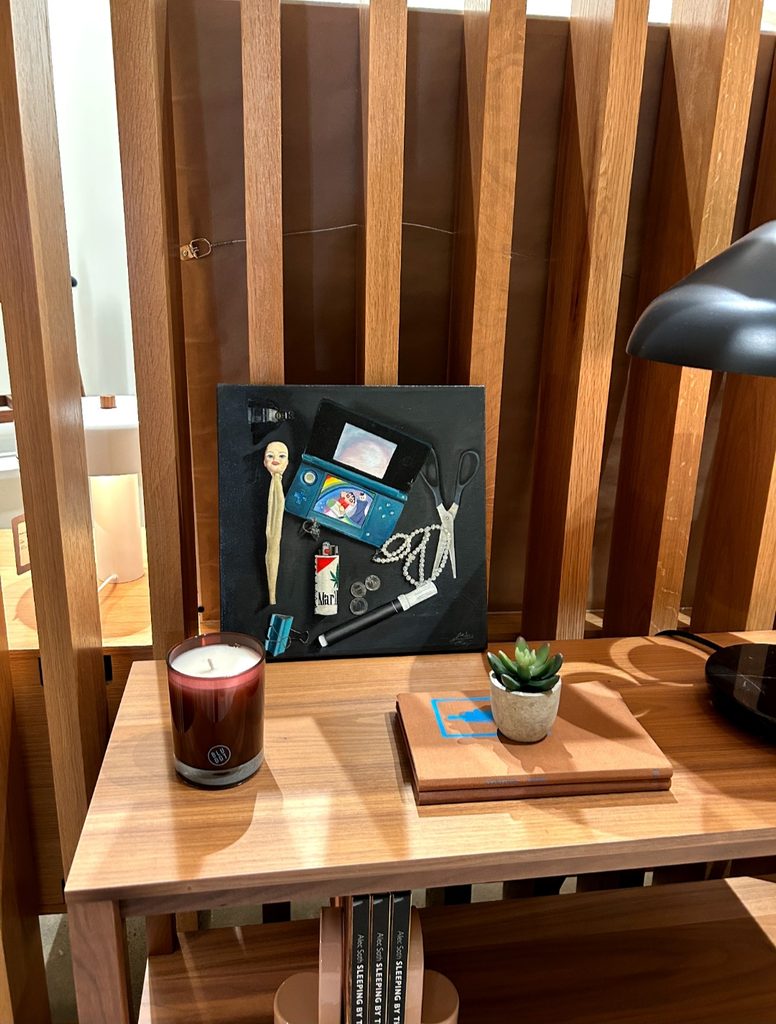
Your paintings On the Table and Dinner were selected for Travel to Art exhibitions in Dallas and Miami. What are the ideas behind these two works?
On the Table (2025) was inspired by ordinary objects scattered across my desk. Although they were arranged chaotically, together they created an unexpectedly harmonious and interesting composition. I wanted to preserve that spontaneous moment on canvas.
The painting may evoke nostalgia for Nintendo, childhood toys, and familiar objects from the past. What makes it interesting to me is the combination of hyperrealism and irony.
Dinner (2024), on the other hand, appears quite simple and flat at first glance. But its subject is much darker. The painting explores human cruelty in everyday life — the kind of cruelty we encounter regularly, sometimes without even noticing it.
Both works reflect my interest in looking beyond appearances and discovering the emotional or psychological meaning hidden within seemingly ordinary situations.
Oleksii Didihurov
