
Australia’s Creative Economy: Innovation, Technology, and Human Capital Converge
By the time most people think of Australia, images of pristine coastlines, world-class universities, and a thriving multicultural society often come to mind. Yet behind these familiar narratives lies another story – the one that is increasingly shaping the country’s economic future. Australia has quietly emerged as a significant player in the global creative economy, leveraging technology, entrepreneurship, and intellectual capital to build industries that extend far beyond traditional notions of art and culture.
Today, the creative economy encompasses far more than galleries, film studios, and performing arts institutions. It includes digital platforms, software development, content creation, communications, design, media innovation, education, and the rapidly expanding creator economy. At its core, the sector is driven by ideas: the ability to transform knowledge, creativity, and innovation into economic value.
In an increasingly interconnected world, Australia’s geographic distance from traditional economic centers has become less of a limitation and more of a competitive advantage. Australian entrepreneurs, researchers, and creators have learned to think globally from the outset, developing products and services designed for international audiences rather than solely domestic markets.
The result is an ecosystem where creativity and technology are no longer separate disciplines. Universities collaborate with startups, researchers become founders, and digital platforms enable individuals to build businesses from virtually anywhere. As artificial intelligence, social media, and digital entrepreneurship continue to reshape how people work and communicate, Australia finds itself well positioned to contribute to the next generation of creative and technological innovation.
Among the professionals helping to shape this evolving landscape is Dr Olga Oleinikova – a scholar, entrepreneur, and global thought leader whose career reflects many of the forces currently transforming Australia’s creative economy.
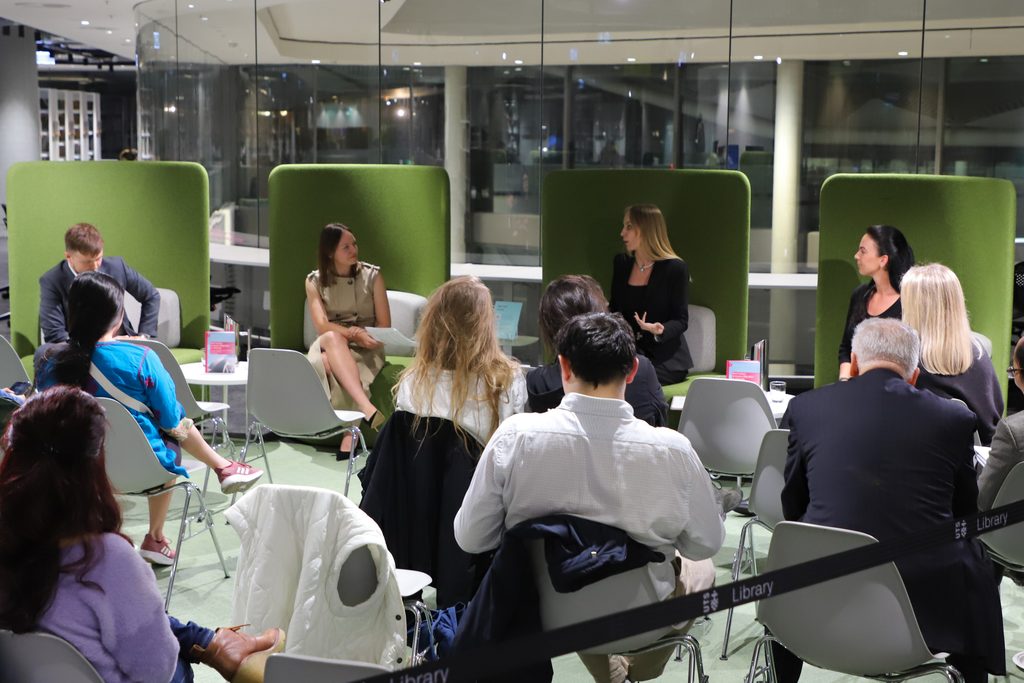
Bridging Academia and Entrepreneurship
Born in Ukraine and educated across multiple international environments, Dr Oleinikova has built a career that spans research, higher education, entrepreneurship, and public policy. Her professional journey has taken her through Switzerland, Germany, the United Kingdom, the United States, and Australia, providing a uniquely international perspective on the social and economic forces shaping contemporary societies.
Holding a PhD in Sociology and Social Policy from the University of Sydney, Dr Oleinikova currently serves as an Associate Professor in the School of Communication at the University of Technology Sydney. Her academic work focuses on some of the defining issues of the twenty-first century, including migration, democracy, political communication, technological transformation, and global mobility.
Alongside her academic and entrepreneurial work, Dr Oleinikova is also associated with the Global Institute of Emerging Human Mobilities, an initiative focused on the study of how migration, technology, and cultural transformation intersect in shaping modern societies. The institute reflects a broader shift in her work from analysing mobility as a sociological phenomenon to examining it as a structural force influencing creativity, labour, and digital economies.
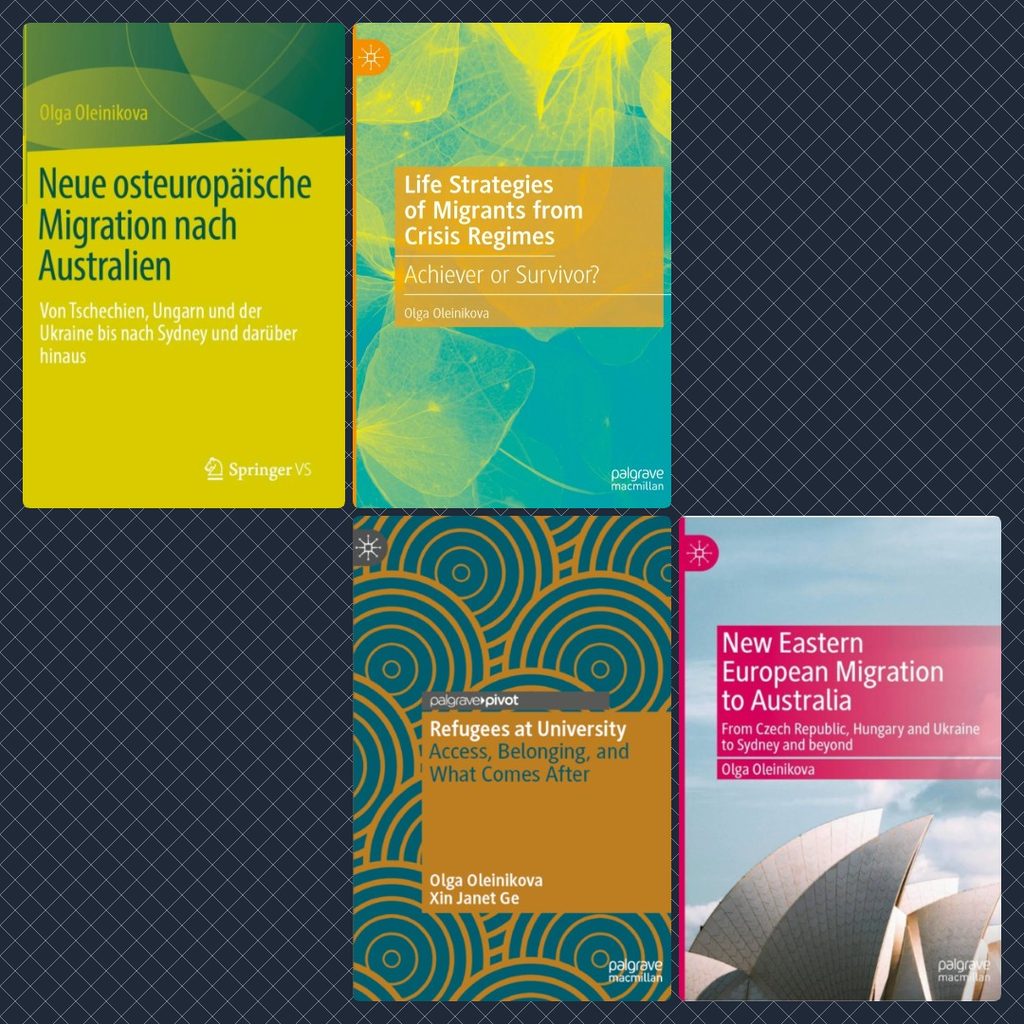
Her scholarly contributions have also resulted in five books examining migration and social adaptation. Through her research, Dr Oleinikova explores how individuals rebuild lives, identities, and opportunities when navigating new cultural and economic environments, questions that have become increasingly relevant in an era marked by global mobility and geopolitical uncertainty.
Yet her influence extends well beyond academia. Alongside her academic career, Dr Oleinikova has become a successful technology entrepreneur, demonstrating how intellectual expertise can be translated into practical innovation. Her ability to navigate both worlds reflects a growing trend within Australia’s knowledge economy, where research, entrepreneurship, and technology increasingly intersect.
Her achievements have earned international recognition, including inclusion in Forbes Top 40 Global Ukrainians and Forbes 30 Under 30 Asia. She has also served as the face of VISA’s global female empowerment campaign and regularly provides expert commentary on international affairs, migration, and democratic processes for major media organizations including BBC News, Bloomberg Television, ABC News, and CNA.
As Australia’s creative economy continues to evolve, leaders like Dr Oleinikova represent a new generation of professionals whose careers transcend traditional boundaries between academia, business, and innovation.

Interview with Dr Olga Oleinikova
To better understand how Australia’s creative economy is transforming in an era of rapid technological change, Travel to Art invited Dr Olga Oleinikova to share her perspective.
Drawing on her experience as an entrepreneur, academic, and international thought leader, Dr Oleinikova reflects on the evolution of Australia’s innovation ecosystem, the growing influence of the creator economy, and the role that technology plays in shaping new business opportunities.
In this exclusive interview with Travel to Art, she discusses the challenges and opportunities facing today’s creative industries, explains why interdisciplinary thinking has become a competitive advantage, and offers her vision for the future of Australia’s knowledge-driven economy.
The creative economy as a tool for democratic development in Australia
Democracy and the creative economy are my two greatest passions. They underpin both my academic work as an Associate Professor of Migration and Democracy at the Faculty of Design and Society at the University of Technology Sydney (UTS), and my work as the co-founder of HeyLink.me, a fast-growing content management platform.
At HeyLink.me, we empower more than 11 million content creators and brands worldwide by providing an innovative link management tool that helps them connect more effectively with their audiences across social media. Every one of those 11 million people is, in a small way, a publisher. A decade ago, they would have needed the permission of a record label, a broadcaster, or a media company to reach an audience. Today, they can build that audience directly – from a phone, from virtually anywhere. That’s democracy in action.
I believe this democratic dimension of the creative economy is often underestimated. Who gets to be a creator, a publisher, or a public voice was once determined by access to capital, geography, and established institutions. What we’ve built is, in effect, infrastructure that removes another layer of that gatekeeping: a simple, powerful tool that enables any creator or small business to present themselves professionally and direct their audience wherever they need to go, without relying on a developer, an agency, or a media company.
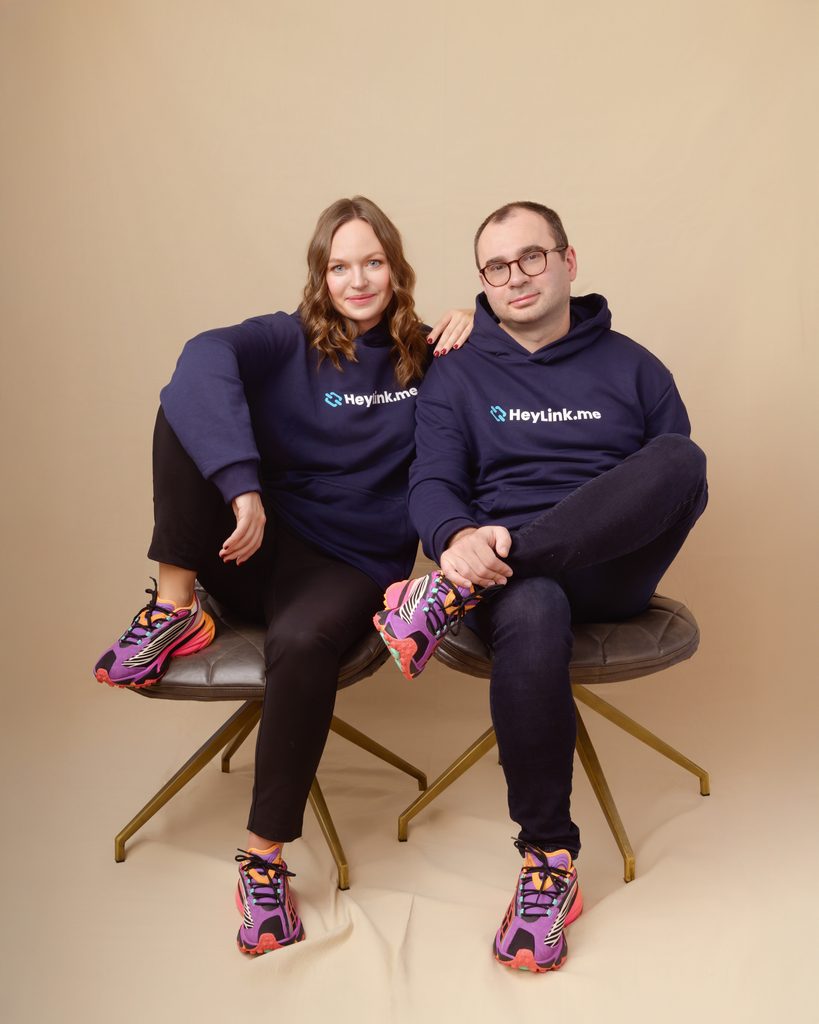
Australia’s multiculturalism makes this even more powerful. My co-founder, Kyrylo, and I are migrants ourselves. We came from Ukraine and built our company in Australia into a global platform that is now ranked among the world’s Top 500 websites. Along the way, we were recognised by Forbes Asia and Forbes Global, and last year The Daily Telegraph named us among NSW’s Top 50 Young Entrepreneurs.
We built our lives here from scratch, without family support or a safety net. Australia’s openness to newcomers and the fresh perspectives they bring is one of the reasons its creative economy remains dynamic and diverse, rather than becoming a monoculture controlled by a handful of platforms or publishers. The more people who can participate in creating culture, not just consuming what a small number of gatekeepers choose to produce, the more democratic the entire system becomes.
Protecting the IP of creative-industry leaders in the AI era, in Australia. Which industries will be least affected by AI?
I’d push back gently on the idea that any industry is completely ‘untouched.’ AI is a horizontal technology, so its effects ripple everywhere, including ours. We use AI ourselves at HeyLink.me in analytics and personalisation, and we help creators create with AI while also understanding their audiences better.
The industries with the most durable resilience tend to share three characteristics: they depend on lived, embodied, or relational trust; they involve physical presence; or they are legally and structurally regulated.
That points to live and experiential creative work – such as theatre, live music, and festivals – as well as high-trust regulated services like healthcare and skilled trades, and highly localised, relationship-based creative industries, such as bespoke design or Indigenous cultural practice, where the maker’s identity and story are as important as the artefact itself.
What’s most exposed is generic, template-based creative production. And that’s exactly why what we’ve built matters more, not less, in this moment. AI can generate endless content, but it can’t manufacture an authentic relationship between a creator and their audience. The premium is shifting from ‘Can you produce content?’ to ‘Can you connect with real people who trust you?’ That’s precisely the problem HeyLink.me exists to solve for our more than 11 million users.
The domain name market, the new digital real estate. What’s the essence of your new project?
I love this framing because it’s exactly how we think about it. A claimed digital identity, a domain name or a link-in-bio page, is becoming the modern equivalent of owning a storefront on a high street. It’s scarce, brandable, and an asset that compounds in value as a creator’s audience and reputation grow.
This isn’t a new bet for us; it’s the natural next step in something we’ve already proven works. For the past two years, we’ve enabled creators to purchase their own domains and connect their HeyLink.me pages to a unique web address instead of using a generic shared URL. The results have been extremely positive. Creators who move to their own domains build greater trust, stronger branding, and a deeper sense of ownership over their audience because it becomes their address on the internet, not simply a profile on our platform.
That success is what is pulling us deeper into the domain industry itself. Our ambition is to build what I’d call a new-age domain empire – moving beyond simply selling domains to owning more of the underlying infrastructure, including our own top-level domains (TLDs), registrars, and registries.
We’re also not starting from zero, as a typical new entrant would. We already have what many domain businesses spend years trying to build: distribution. Our existing community of more than 11 million creators and brands represents a ready-made, high-intent customer base for exactly this type of product.
And to come back to the AI question, this is precisely why I don’t believe AI will fundamentally disrupt this space. A domain is digital real estate. It’s anchored to a verified, registered, ownable identity, much like a piece of land is tied to a legal deed. AI can generate an infinite amount of content, but it cannot manufacture scarcity, ownership, or trust. If anything, as AI floods the internet with generated content, owning a verified piece of digital real estate, a domain that is unmistakably yours, will become even more valuable.
Global mobility of creative-industry leaders – Australia’s National Innovation Visa (Subclass 858)
I can speak to this from direct personal experience, not just policy analysis. Kyrylo and I arrived in Australia as university students, stayed here permanently as skilled migrants, and built HeyLink.me entirely from Australia. We bootstrapped the company into a profitable business that now serves more than 11 million creators and brands globally. We are, in a very literal sense, the kind of human capital Australia’s migration strategy is designed to attract.
The National Innovation Visa, which replaced the former Global Talent visa in December 2024, is smart policy because it treats talent as a strategic asset rather than a bureaucratic afterthought. It is an invitation-only pathway to permanent residency for people with an internationally recognised record of exceptional achievement, explicitly including creatives and athletes alongside founders and researchers. There is no points test and no employer sponsorship requirement. What matters is demonstrated, independently verified impact, supported by a credible Australian nominator.
What this signals is that Australia is beginning to compete for talent in the same way it competes for capital. It recognises that one exceptional founder, researcher, or creative leader can generate more long-term value: in jobs, intellectual property, cultural capital, and soft power, than a much larger pool of conventional skilled migrants.
Our own story is one example of that principle in action: a company founded by two immigrants, built in Australia, and now supporting more than 11 million creators worldwide. Australia’s political stability, its strategic position between the Asia-Pacific region and Western markets, and its genuinely multicultural society are all competitive advantages that few countries can easily replicate.
The honest caveat is that the program remains highly selective and evidence-driven. Only a few hundred invitations have been issued since its launch, so its long-term success will depend on whether Australia can move quickly and communicate the opportunity clearly enough to attract the world’s best talent, rather than simply creating an excellent pathway that too few people know exists.
Brisbane 2032, how the Olympics is reshaping Australian cities, culture, and the creative economy?
Brisbane 2032 is one of the more interesting cultural policy experiments Australia has undertaken in decades, because for the first time the Olympic Games are not being treated as a four-week sporting event layered onto a city. Instead, they sit at the centre of a 20-year strategy — the “Elevate 2042” legacy plan — with arts and culture embedded from the outset. The Games vision for the Brisbane 2032 Olympic and Paralympic Games is articulated as: “Believe. Belong. Become. Brisbane 2032.”
A few elements stand out:
- The four-year Cultural Olympiad, beginning in 2028, is explicitly designed to showcase Australian creativity to a global audience, drawing lessons from London 2012 and Paris 2024 about ensuring local artists, not only imported productions, are given visibility.
- First Nations leadership is positioned at the centre rather than the margins, framing the Games as a celebration of 65,000 years of continuous culture – a positioning that is genuinely distinctive compared to most previous Olympic hosts.
- Infrastructure investment is explicitly linked to creative-sector capacity. New venues and precincts are intended to leave behind permanent cultural infrastructure, not only sporting facilities.
For platforms like ours, events of this scale matter directly. A global spotlight on Australia translates into a global spotlight on the creators, small businesses, and brands telling their stories online. At HeyLink.me, we expect to see a surge in activity among our creator base in the lead-up to 2032, as we have seen around other major regional cultural and sporting moments.
The real test, however, is not the opening ceremony. It is whether cultural investment survives the budget process over the next six years, as culture and community programs are historically among the first areas to face pressure when costs increase.
How is contemporary Indigenous creativity in Australia supported?
Support operates on multiple levels, and the system has matured significantly in recent years.
• Dedicated federal funding infrastructure: The Indigenous Visual Arts Industry Support (IVAIS) program funds the operating backbone of the sector – more than 85 Aboriginal and Torres Strait Islander-owned art centres, along with regional art fairs and industry bodies – providing approximately $32 million annually. This supports the institutions, galleries, studios, marketing, and training that enable artists to earn a sustainable income, rather than relying solely on one-off grants.
• Cultural and Intellectual Property (ICIP) frameworks: Creative Australia requires that any project involving First Nations content or artists properly engage with the relevant communities and respect collective, not only individual, ownership of cultural knowledge. This is increasingly important in the AI era, where the unauthorised reproduction of Indigenous designs and stories represents a real and already-contested risk.
• Contemporary, cross-disciplinary investment: Dedicated funds now support First Nations-led work across dance, music, theatre, and digital media. Brisbane 2032’s Cultural Olympiad also explicitly positions First Nations creatives in leadership roles on the global stage.
This is a cause I personally care deeply about for a simple reason: it mirrors the mission we have built our company around – ensuring that anyone, regardless of where they start, has real tools and a real platform to build an audience and earn from their own voice.
Whether that is an Indigenous artist in a remote art centre, or one of the 11 million creators using HeyLink.me to grow their audience, the principle is the same: ownership, authenticity, and a direct connection to the people who value your work should not depend on permission from gatekeepers.
Building Global Digital Infrastructure for the Creator Economy
While much attention is often given to creators themselves: artists, influencers, educators, and entrepreneurs, less visible are the technology platforms that enable them to build audiences and generate income.
One of the defining characteristics of today’s creative economy is the emergence of digital infrastructure designed specifically for independent creators and businesses. As traditional career paths become increasingly fragmented, individuals are relying more heavily on digital tools to establish professional identities, engage communities, and create sustainable revenue streams.
This broader transformation provides important context for understanding HeyLink.me, the technology company co-founded by Dr Olga Oleinikova.
The platform emerged during a period when social media was becoming increasingly complex. Businesses, creators, consultants, and public figures were managing audiences across multiple platforms, often struggling to connect users with products, services, content, and communities through a coherent digital experience.
Rather than viewing this challenge as a limitation, the founders recognized an opportunity to simplify how people interact online.
Today, HeyLink.me serves millions of users worldwide and attracts hundreds of millions of monthly visits, making it one of the most successful examples of Australian-connected digital innovation operating on a global scale.
Its growth reflects a broader shift in the modern economy. Increasingly, value is being created not only through physical products but through attention, expertise, content, and digital relationships. Individuals who once depended on traditional employers now have the ability to build businesses around knowledge, creativity, and personal brands.
This evolution has given rise to what economists often describe as the creator economy, a sector that continues to expand as digital technologies reduce barriers to entrepreneurship.
In this environment, platforms such as HeyLink.me function as critical infrastructure. They provide creators and businesses with the ability to organize their digital presence, connect audiences with relevant content, and transform engagement into commercial opportunity.
The company’s trajectory also highlights another important aspect of Australia’s innovation ecosystem: the ability to build globally relevant products from a geographically distant market.
Historically, Australian entrepreneurs have faced the challenge of operating far from major technology centers in North America and Europe. Yet this distance has often encouraged founders to think internationally from the beginning. Rather than designing products for a limited local audience, many Australian startups pursue global markets from their earliest stages of development.
HeyLink.me exemplifies this approach. Its growth across multiple regions demonstrates how Australian-based innovation can compete internationally when supported by strong technology, scalable business models, and a clear understanding of evolving market needs.
Beyond commercial success, the platform reflects a larger trend shaping the future of creative economies worldwide. Technology is no longer simply supporting creative work – it is becoming an integral part of how creativity is produced, distributed, monetized, and sustained.
For Dr Oleinikova, the connection between entrepreneurship and research is not coincidental. Her academic work examines adaptation, resilience, communication, and human behavior within changing social environments. These same themes can be seen in the development of digital platforms designed to help individuals navigate an increasingly connected world.
As Australia continues to strengthen its position within the Asia-Pacific innovation landscape, stories like HeyLink.me illustrate the growing importance of knowledge-driven entrepreneurship. They demonstrate how creativity, technology, and intellectual capital can converge to create businesses capable of generating both economic value and global impact.
In many ways, the future of Australia’s creative economy will depend on exactly this type of convergence: where ideas developed through research, education, and human experience evolve into innovations that reach audiences far beyond national borders.
Author Myroslava FallBeck
